How I didn’t make South Park Phone Destroyer Trading Cards
The complete trading-card collection I definitely did not spend far too much time making
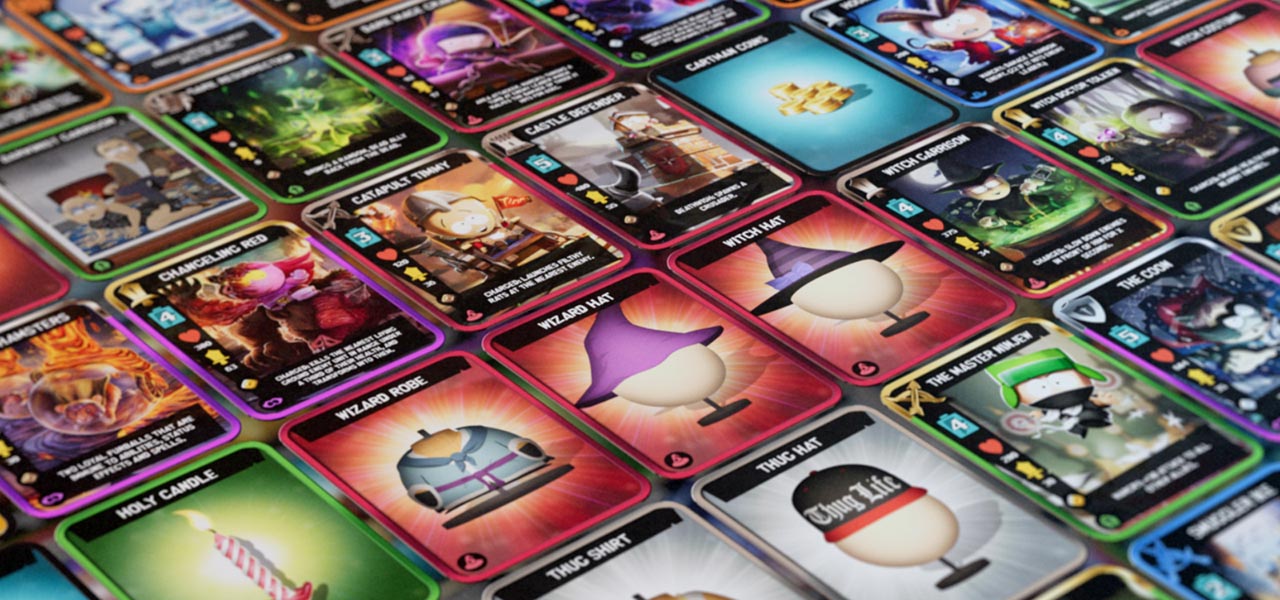
A completely hypothetical personal project in which I absolutely did not turn more than 500 South Park Phone Destroyer cards into a professionally organised physical collection. The alleged workflow combined automated layout generation, image processing, print production and a worrying commitment to a product that officially does not exist.
Brief
South Park Phone Destroyer had hundreds of great card designs and no official physical trading-card set.
A reasonable person would have accepted this. Hypothetically, I considered a different approach: collect the full game library, rebuild it for print and create a consistent double-sided card system with proper production specifications.
Again, allegedly.
The Challenge
More than 500 cards means that manually rebuilding every layout stops being a fun craft project somewhere around card seventeen.
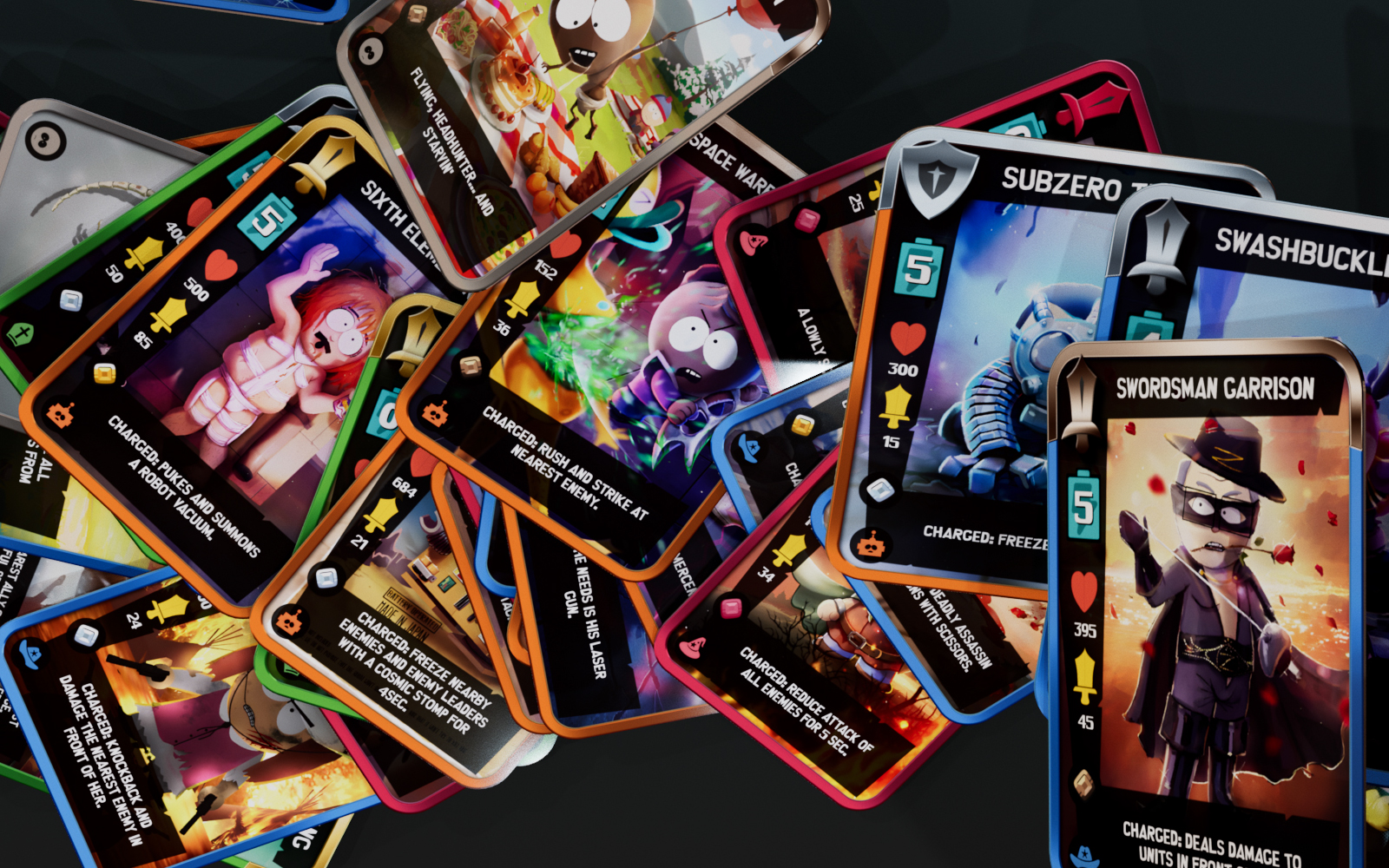
Each card needed consistent dimensions, typography, stats, icons, bleed, crop marks and back artwork. Source imagery also varied in quality, and the final physical cards needed to survive printing, trimming, laminating and sleeving without the system drifting out of alignment.
Execution
I may or may not have built an After Effects setup that generated print-ready front and back layouts from structured inputs, with expressions handling the repeated design logic.
Batch rendering produced the full set consistently, after which the completely imaginary cards were printed, laminated, trimmed and sleeved by hand.
The interesting part was using motion-design tools for something they were never really intended to do, because a repeatable layout problem is still a repeatable layout problem even when nothing moves.
Stills & Styleframes
Results
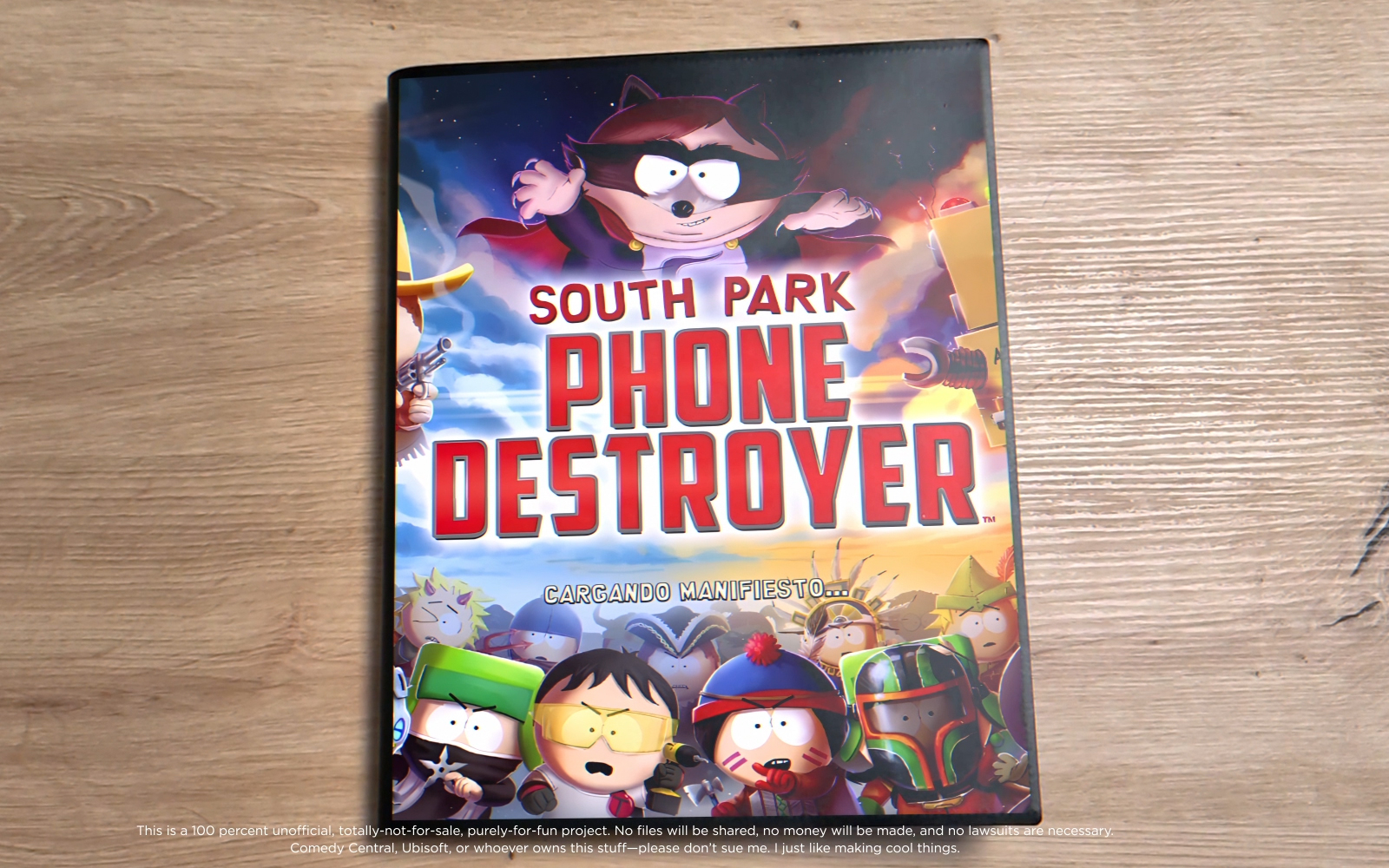
There is definitely not a binder containing a complete, glossy, carefully organised physical card collection sitting somewhere in my house.
If there were, the project would be a useful example of automation crossing into print production, turning hundreds of repetitive layouts into one controlled system while still ending with a very analogue object.
Personal Reflection
Personal projects are useful because nobody is there to stop you when the scope becomes objectively silly.
Whether or not these cards exist, the exercise pushed my thinking around batch design, structured data and physical production. It also proved that automation can support extremely important business goals, such as owning unofficial South Park cards.